
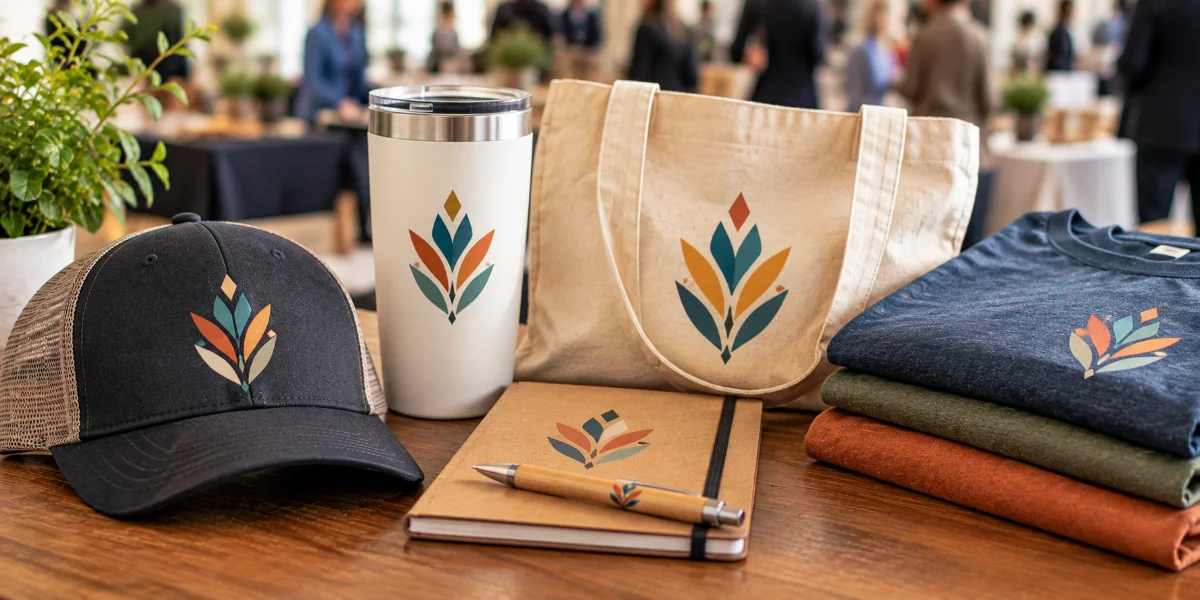
The best branded merchandise found in St. Paul is not always the product that gets the biggest reaction when handed out. Products that are useful, relevant, comfortable, and made to last can keep an organization visible long after an event ends.
A table full of unusual promotional products can attract attention at an event. People stop, pick something up, smile, and take it home. But what happens to that product a week later? If it lands in a drawer and is never used again, that initial excitement may not have accomplished much for the organization behind it.
When you’re choosing branded merchandise, it should involve more than finding the newest or most unusual giveaway. At Big Spirit Inc., we look at promotional products through a marketing lens. That means we consider who will receive the product, what marketing goal you want to accomplish, and whether the item has a realistic place in someone’s everyday life. Sometimes the best choice is not the product that gets the biggest reaction at the moment. It’s the one someone is still using months or even years later.
Branded Merchandise Should Start With the Audience
Based in the Twin Cities, we serve organizations throughout cities in our area, like St. Paul. But we also partner with clients all around the country. And no matter where your organization is located, every time we begin a promotional product project, we want to understand your audience first. We also want to know what you’re trying to accomplish and how you want your brand to resonate with the people receiving the item. Those questions help us move beyond simply selecting merchandise.
We think of this process almost like developing a mini marketing plan. If you know the audience and the desired outcome, you can begin identifying products that make sense for both. A giveaway for conference attendees may need to accomplish something different from apparel for employees, merchandise for a community program, or an item intended to keep a non-profit visible after an event.
That is why we don’t believe there is one universally “best” promotional product. The right choice depends on the people who will receive it. Something useful for one audience could be completely irrelevant to another, regardless of how popular or creative the product appears in an online catalog.
Useful Doesn’t Have to Mean Boring
Sometimes, there’s a temptation to assume a promotional product has to be unusual to be memorable. Some of the simplest products can have significant staying power when they fit the audience and the situation.
Shanne Soulier, founder and CEO of Big Spirit, points to lip balm as an example. It may not sound like the flashiest promotional item, but in the Midwest, Northeast US, or Pacific Northwest during fall and winter, it can be remarkably practical. People keep it in a purse, coat pocket, vehicle, or desk and reach for it repeatedly. They might even rediscover it later, see your organization’s name again, and remember it.
The same thinking can transform a familiar promotional item into something more relevant. Shanne also gives the example of a construction company that wants to give away pens. Rather than selecting the most basic option simply because pens are traditional, we might look for a technical pen or multi-tool pen that has a stronger connection to the industry.
For government agencies, educational institutions, non-profits, or Native American communities, product selection becomes a marketing decision. The goal is not necessarily to find something no one has ever seen before. It is to find something that makes sense for the audience, supports the brand, and earns a place in the recipient’s life.
The Problem with Choosing Novelty Alone
Novel products can create an immediate reaction, and there are situations where that reaction serves a purpose. But novelty by itself does not guarantee lasting marketing value.
Shanne compares some novelty promotional products to the excitement children experience when opening a new toy at Christmas. The toy gets immediate attention. They play with it for a couple of days, and then it may get set aside and forgotten. A promotional product can follow the same pattern.
That initial reaction can make a product seem successful. People gather around the giveaway table, talk about the item, and take one home. But if the product has little practical value after that moment, your brand may disappear along with the excitement.
This doesn’t mean every promotional product needs to be purely practical or predictable. Creativity still matters. The better question is whether the creativity serves the audience and the marketing goal. Ideally, the product creates interest while also giving the recipient a reason to keep it.
When you’re investing limited marketing dollars, longevity deserves consideration. A useful item can create repeated exposure without requiring the organization to pay for each additional interaction. Every time someone reaches for that item, wears it, carries it, or sees it again, your brand has another opportunity to be remembered.
Quality Can Extend the Life of Branded Merchandise
Apparel makes the connection between usefulness, quality, and longevity especially clear. A T-shirt can technically accomplish the goal of putting a logo on clothing, but that does not mean people will actually want to wear it.
When we help a client select apparel, we consider the material and overall wearability, not simply the lowest available price. Make no mistake, there are affordable shirts that still feel great and hold up well. But the most inexpensive option isn’t always the best option. The important question is whether someone will want to keep wearing the shirt after the event or program is over.
Big Spirit recently reproduced three projects for a client we had originally produced more than three years earlier. The client continued to rave about the quality of the shirts and the printing from the original project. When new team members needed apparel, they returned to Big Spirit to produce more.
Think about what those three years represent from a marketing perspective. If someone is still wearing an organization’s shirt years after receiving it, that brand continues traveling through the community. Other people see the logo, recognize the program, or ask the wearer what the organization is about.
That creates a different kind of value than a product that generates excitement for one afternoon and disappears. The shirt is not simply merchandise anymore. It becomes an ongoing brand touchpoint.
Think About Mileage, Not Just the Moment
When you are selecting branded merchandise to use in St. Paul, it can help to think in terms of mileage. How many meaningful interactions could this product potentially create over its useful life?
This question changes how organizations can think about cost. The least expensive product is not automatically the best value, just as the most expensive item is not automatically the most effective. A better comparison considers what your organization receives from the investment. If one product costs slightly more but is kept and used substantially longer, that longevity may make it the stronger marketing choice.
At Big Spirit, our promotional product conversations with you begin with the audience and objective rather than the catalog. We want to know what you are trying to accomplish, how you want your brand to resonate, and what kind of experience makes sense for the people you want to reach.
Novelty can be fun, and sometimes a creative product is exactly right for the moment. But useful merchandise has an advantage that is easy to overlook: it keeps showing up.
For organizations choosing branded merchandise in St. Paul, the strongest product may not be the one that creates the loudest reaction when the box opens. We approach promotional products as part of the larger marketing strategy. We consider the audience, the goal, and the potential life of the product before helping clients narrow their options. From there, we manage sourcing and production coordination through trusted manufacturing and production partners so you can focus on the larger work behind your campaigns, programs, and events.
We invite you to explore Big Spirit’s promotional products services. Tell us who you are trying to reach and what you want the product to accomplish, and we can help you find merchandise designed to keep working long after the initial giveaway.
Frequently Asked Questions:
What types of branded merchandise in St. Paul are most useful?
The most useful products depend on your audience, goals, season, and how recipients are likely to use the item. Everyday products, quality apparel, and items connected to the recipient’s work or lifestyle can all provide strong long-term value.
Are practical promotional products better than novelty items?
Not in every situation, but practical products often have an advantage because people have a reason to keep using them. Novelty can create immediate excitement, while usefulness can create repeated brand exposure over a longer period.
How do I choose branded merchandise for my audience?
Start by identifying who will receive the product and what you want them to remember or do afterward. Then evaluate potential items based on relevance, usefulness, quality, budget, and how well they support the larger marketing goal.
What makes promotional merchandise memorable?
Memorable merchandise often combines relevance with repeated use. An item does not have to be unusual if it is useful enough that someone sees, wears, or uses it regularly.
Is apparel a good choice for branded merchandise?
Apparel can provide lasting brand visibility when recipients genuinely want to wear it. Fabric quality, comfort, fit, decoration quality, and relevance to the audience all affect how much use the apparel receives.
Why does product quality matter for promotional merchandise?
Quality can affect how long someone keeps and uses a promotional product. An item that performs well or remains comfortable over time can provide more opportunities for the recipient and others to encounter the brand.
Should I choose the cheapest promotional product available?
Price is important, but the lowest-cost product is not always the best marketing value. Consider how likely recipients are to use the item and how long it may remain in circulation alongside the initial cost.