
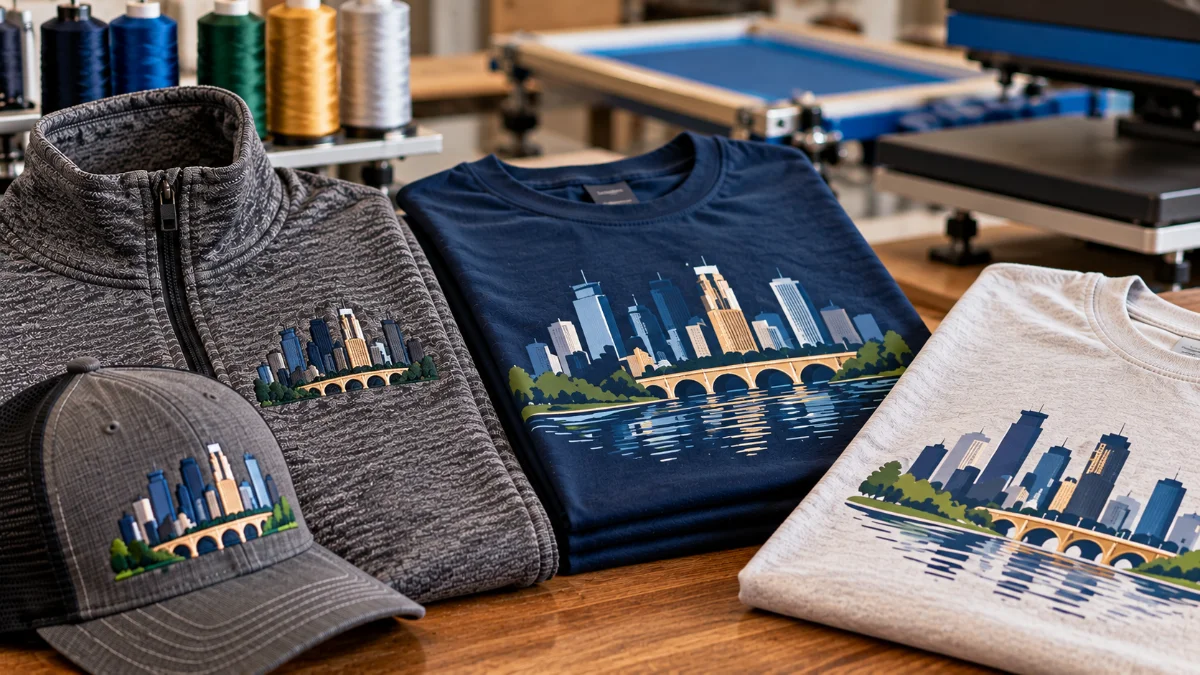
Choosing between embroidery, screen printing, and heat transfer can affect how custom apparel looks, feels, performs, and fits within a project budget. Each method has strengths, and the right choice depends on factors such as garment type, artwork, quantity, intended use, and desired appearance. This article breaks down the differences so Minneapolis organizations can make a more informed decision before moving into production.
There are a million ways to create an eye-catching t-shirt, vest, or pair of shorts. Embroidery, screen printing, and heat transfer are common decoration methods. And each can produce effective branded apparel, but they are not interchangeable.
The right decoration method depends on the garment, artwork, quantity, desired appearance, use, budget, and production needs. Understanding those differences can help you avoid choosing a method based on just what you’re familiar with and instead create apparel that supports the purpose of your project.
Your team has approved the logo, chosen an event date, and knows who needs apparel. Then a seemingly simple question appears: What if, instead of screen printing the graphic on a sweatshirt, we embroider it? Organizations planning to use custom apparel in Minneapolis often reach this point, and Big Spirit Inc. helps clients evaluate the full project before recommending how to produce a design.
No single method is universally “best.” The strongest choice is the one that fits the garment, artwork, audience, quantity, intended use, and visual impression the organization wants to create.
Start With How the Apparel Will Be Used
Decoration should never be the only consideration when designing custom apparel. A polo worn by staff in professional settings serves a different purpose from a T-shirt distributed at a community walk. A jacket intended for years of use also creates different production considerations from short-term event apparel, like a rain poncho.
Start by asking who will wear the garment and where. Staff uniforms may need to communicate consistency and professionalism, while volunteer shirts may prioritize visibility and comfort. Community outreach apparel might need an eye-catching design that reads clearly from a distance. Big Spirit’s promotional product and apparel capabilities can support those different needs, but the strategy should come before the production method.
The artwork itself matters just as much. A small logo, a large multicolor illustration, fine text, and a photographic image each behave differently when translated onto fabric. Garment material, placement, color, and surface can also affect the result. Evaluating those factors together with Big Spirit can help you make a more informed decision.
Embroidery for Custom Apparel in Minneapolis
Embroidery uses thread to stitch a design directly into a garment. It creates texture and dimension, which can make logos feel polished and established. Organizations commonly consider embroidery for polos, jackets, hats, quarter-zips, workwear, and other garments intended for repeated professional use.
Clean logos and designs that translate effectively into stitching tend to work especially well with the method. However, very small details, certain gradients, or highly intricate artwork may need adjustment because thread does not reproduce an image in exactly the same way as ink or a transfer. Design preparation is therefore an important part of the process.
Embroidery can be a great choice when your apparel needs to feel durable and professional, but the garment still matters. Fabric weight, construction, and decoration location can influence how the stitching sits on the piece. Rather than deciding that embroidery is automatically the premium choice, we look at whether it supports the actual application.
There’s a lot to consider when choosing embroidery for your custom apparel look. Organizations planning to use custom apparel in Minneapolis should weigh the desired look against budget and use. Big Spirit helps you think through all the details and choices through our free consultation for all clients.
When Screen Printing Makes Sense
Screen printing applies ink through prepared screens to create a design on the garment. It has long been a practical choice for T-shirts, sweatshirts, and other projects where organizations need a consistent printed design across a large quantity of garments.
The method can work especially well for bold graphics and designs with defined colors. Because setup is part of the production process, the number of colors, garment type, print locations, and quantity all influence whether screen printing makes sense for a particular job.
Fundraising events, community campaigns, school programs, volunteer teams, and awareness initiatives often consider screen printing. A strong printed shirt can become part of the event itself and continue carrying the organization’s message afterward.
Artwork preparation remains important here, too. Your design has to translate well to ink and fabric, and garment color can influence production decisions. Big Spirit can help identify potential issues before production rather than discovering them too late.
What’s the Advantages of the Heat Transfer Method?
Heat transfer methods use heat and pressure to apply a design to the garment. This method of creating custom apparel in Minneapolis includes different technologies and materials, so the exact characteristics can vary. In the right application, heat transfer can reproduce detailed or colorful artwork and offer flexibility for certain quantities, garment types, and personalization needs.
This option may make sense when a project includes individual names or numbers, smaller quantities, detailed graphics, or requirements that do not align as neatly with traditional screen printing. It can also be useful for particular materials or placements, depending on the transfer technology and garment specifications.
That flexibility does not mean heat transfer is automatically right for every detailed design. Durability expectations, fabric, wash and care requirements, appearance, and intended use should all be considered.
For that reason, Big Spirit approaches the method as one piece of the larger decision. Our role is to help you understand the tradeoffs and coordinate a production approach that supports the intended result. If the technical choices feel unclear, you can contact Big Spirit for guidance before committing to a method.
Let the Project Determine the Decoration Method
It is tempting to ask whether embroidery, screen printing, or heat transfer is “best,” but that question leaves out the most important information. Best for what? A staff polo, volunteer T-shirt, winter jacket, conference shirt, tribal program, school event, and public awareness campaign can all call for different solutions.
At Big Spirit, we start with your project goals. We consider your audience, garment, design, quantity, timing, intended use, and desired visual result before helping determine an appropriate production path. Our consultation, which we provide free of charge to our clients, accomplishes this. We then manage sourcing, production coordination, and quality oversight through trusted manufacturing and production partners, helping maintain consistency from concept through delivery.
As a Native American-owned and operated strategic marketing, creative design, and consulting agency in Minneapolis, Big Spirit works with nonprofits, tribal entities, government agencies, educational institutions, and other mission-driven organizations from all around the country. We see custom apparel as one part of a larger communication effort. Clients can explore general promotional product and apparel information while using our consulting process to make decisions specific to their project.
If you are planning to use custom apparel in Minneapolis, or anywhere in the United States, and are unsure which decoration method fits your garments, artwork, quantities, or goals, contact Big Spirit for a consultation. We will help you find a production approach that supports both the practical needs of your project and the message you want to send.
Frequently Asked Questions:
Which decoration method for graphics is best when creating custom apparel in Minneapolis?
There is no single best method for every apparel project. The right choice depends on the garment, artwork, quantity, intended use, budget, and desired appearance.
Is an embroidery option good for company or staff apparel?
Embroidery can work well for polos, jackets, hats, quarter-zips, and other professional garments. You need to evaluate the logo design, fabric, placement, and expected use before production.
When should an organization consider screen printing?
Screen printing can be a practical option for T-shirts, sweatshirts, event apparel, volunteer shirts, and awareness campaigns. Design colors, quantities, print locations, and garment selection all influence the decision.
When is heat transfer a good option for custom apparel?
Heat transfer can provide flexibility for detailed graphics, smaller quantities, personalization, and certain garment applications. You should match the specific transfer process to the fabric and its expected use.
Can Big Spirit recommend the right decoration method for my apparel?
Yes, we can review your project’s goals, artwork, garments, quantities, timing, and use before helping determine an appropriate production approach for custom apparel in Minneapolis.
Does the fabric influence the choice of decoration method?
Yes, garment material and construction can influence how embroidery, ink, or a transfer performs. Evaluating the fabric before production helps avoid choosing a method that does not suit the garment.
How do I get help choosing between embroidery, screen printing, and heat transfer?
Start by gathering your artwork, garment ideas, estimated quantities, timeline, and intended use. Big Spirit can then discuss those factors with you and help identify an approach suited to your project.